


Market Analysis Consulting for IT Professionals in Canada and USA
- Carlos Perez Alviarez

- Aug 13, 2025
- 9 min read
Updated: Aug 16, 2025

IT professionals across Canada and the USA are facing more complex market challenges than ever before. Here is something most people miss. Over 80 percent of North American IT leaders now rely on market analysis consulting to sharpen their competitive edge and uncover hidden risks. That reliance is not just about playing it safe. It is a bold move that lets the most forward-thinking firms turn uncertainty into real opportunity.
Table of Contents
Quick Summary
Takeaway | Explanation |
Market analysis is crucial for IT leaders. | IT leaders need market consulting to navigate complexities and make informed strategic choices in technology. |
Identify competitive advantages through insights. | Strategic insights allow firms to position themselves uniquely and respond proactively to market conditions. |
Optimize resources with market insights. | Effective consulting enables smarter resource allocation and focuses on high-potential investments in technology. |
Build trust with consulting partners. | Selecting the right consulting partner requires evaluating expertise and fostering collaborative relationships for effective outcomes. |
Adopt agile strategies for market integration. | Rapid insight integration facilitates quick decision-making, helping organizations stay responsive to changing market dynamics. |
Why IT Leaders Need Market Analysis Consulting
In the rapidly evolving technology sector, IT leaders face unprecedented challenges in strategic decision making. Market analysis consulting provides a critical pathway for organizations to navigate complex technological landscapes and make informed strategic choices. Understanding strategic market insights enables IT leaders to transform raw data into actionable intelligence.
Competitive Advantage Through Strategic Insights
Successful IT organizations recognize that market analysis is more than a supplementary service. According to research from the Small Business Administration, competitive analysis helps businesses identify unique market positioning and differentiate themselves from competitors. For IT leaders, this means developing a nuanced understanding of technological trends, customer needs, and potential disruptions before they become critical.
Market analysis consulting offers several key strategic benefits. First, it provides comprehensive insights into emerging technologies, competitive dynamics, and potential market shifts. Second, it enables IT leaders to anticipate technological trends rather than merely reacting to them. Third, it supports data-driven decision making by translating complex market information into clear, actionable strategies.
Mitigating Risk and Maximizing Opportunities
Risk management is a fundamental aspect of market analysis consulting. By systematically evaluating internal capabilities and external market conditions, IT leaders can develop more resilient technological strategies. This approach allows organizations to allocate resources more effectively, identify potential technological investments, and understand potential challenges before they become significant barriers.
Moreover, market analysis consulting helps IT leaders discover strategic client acquisition opportunities by providing deep insights into market dynamics. Understanding customer needs, technological preferences, and emerging trends enables more targeted and effective technological solutions.

In the complex and fast-moving world of information technology, market analysis consulting is not a luxury—it is a strategic necessity. IT leaders who invest in comprehensive market analysis position their organizations to innovate, adapt, and thrive in an increasingly competitive global technology ecosystem.
Key Benefits for IT Firms in North America
IT firms in North America face increasingly complex technological and market challenges that demand sophisticated strategic approaches. Government research highlights the critical role of market analysis consulting in helping organizations navigate these intricate business environments.
Enhanced Competitive Intelligence
Market analysis consulting provides IT firms with deep insights into technological trends, competitive landscapes, and emerging opportunities. By systematically examining market dynamics, organizations can develop more nuanced strategies that go beyond surface level observations. This approach allows IT firms to understand not just current market conditions, but potential future scenarios that could impact their business models.
Key competitive advantages include identifying technology adoption patterns, understanding customer preferences, and recognizing potential disruption points before they become mainstream. Firms that leverage market analysis consulting can position themselves proactively rather than reactively, creating significant strategic advantages in the rapidly evolving tech ecosystem.
Strategic Resource Optimization
Effective market analysis consulting enables IT firms to allocate resources more intelligently. By providing detailed insights into market segments, technological trends, and potential investment areas, consulting services help organizations make data driven decisions about product development, talent acquisition, and technological infrastructure.
This strategic approach allows IT firms to:
Minimize unnecessary technological investments
Focus research and development efforts on high potential areas
Develop more targeted product and service offerings
Anticipate market shifts before competitors
Risk Mitigation and Innovation
Market analysis consulting serves as a critical risk management tool for IT firms in North America. Learn more about strategic planning techniques that can transform organizational capabilities. By providing comprehensive market intelligence, consulting services help firms identify potential challenges and opportunities before they become significant business risks.
Innovation emerges not just from technological capabilities, but from understanding market needs and potential disruption points. Market analysis consulting bridges this gap by providing contextual intelligence that goes beyond traditional market research. IT firms can use these insights to develop more responsive, customer centric technological solutions that address emerging market demands.
In the dynamic technological landscape of North America, market analysis consulting is no longer optional—it is a strategic imperative for IT firms seeking sustainable growth and competitive advantage. Organizations that embrace comprehensive market intelligence position themselves to lead rather than follow in an increasingly complex global technology ecosystem.
How to Choose the Right Consulting Partner
Selecting the right market analysis consulting partner represents a critical strategic decision for IT professionals seeking to enhance their organizational capabilities. The process requires careful evaluation and a structured approach to ensure alignment with specific business objectives and technological needs.
Evaluating Expertise and Credentials
According to EDUCAUSE Review, the initial step in choosing a consulting partner involves thoroughly assessing their professional credentials and demonstrated expertise. IT organizations should prioritize consultants who possess specialized knowledge in their specific technological domain, with verifiable track records of successful market analysis projects.
Key evaluation criteria include:
Depth of industry experience
Relevant technological certifications
Previous client testimonials
Demonstrated understanding of complex IT ecosystems
Proven methodological approaches to market research
Professional recommendations and peer referrals play a significant role in identifying reputable consulting partners. Understanding client interview strategies can further enhance the selection process and ensure comprehensive due diligence.
Building Trust and Collaborative Relationships
Research from Esade emphasizes the critical importance of trust when selecting a consulting partner. Beyond technical competence, organizations must evaluate the potential consultant’s ability to collaborate effectively, transfer knowledge, and integrate seamlessly with existing teams.
Effective consulting partnerships are characterized by:
Transparent communication
Willingness to understand organizational culture
Flexible and adaptive problem solving approaches
Commitment to knowledge transfer
Clear expectations and mutually defined project outcomes
Strategic Project Planning and Alignment
The Minnesota Management and Budget guide recommends a comprehensive approach to consultant selection that goes beyond initial credentials. IT leaders should invest time in understanding their organization’s specific needs and preparing a detailed project framework before engaging a consulting partner.
Strategic considerations include:
Clearly defined project scope and objectives
Alignment with organizational strategic goals
Budgetary constraints and expected return on investment
Potential for long term collaboration
Compatibility with existing technological infrastructure
Choosing the right market analysis consulting partner is not merely a transactional decision but a strategic investment in organizational capabilities. IT professionals must approach the selection process with diligence, focusing on expertise, trust, and potential for meaningful collaboration that drives technological innovation and market understanding.
To make it easier for IT leaders to evaluate consulting partners, the following table summarizes key criteria and their importance as discussed in the article.
Evaluation Criteria | Importance for IT Consulting Partner Selection |
Depth of industry experience | Ensures the consultant understands sector-specific challenges and trends |
Relevant technological certifications | Shows technical expertise in critical IT domains |
Previous client testimonials | Demonstrates a history of successful, trusted engagements |
Understanding complex IT ecosystems | Allows for targeted, practical recommendations for your environment |
Proven methodological approaches | Guarantees structured and reliable market analysis |
Professional recommendations | Provides external validation and credibility |
Effective client interview strategies | Ensures comprehensive needs assessment and alignment with objectives |
Best Practices for Leveraging Market Insights
Market insights represent a powerful strategic asset for IT professionals seeking to drive organizational innovation and competitive advantage. Research from the National Institutes of Health emphasizes the critical importance of evidence-based decision making in transforming raw market data into actionable strategic intelligence.
Data Triangulation and Validation
Effective market insight leveraging begins with a comprehensive approach to data collection and validation. IT professionals must move beyond single source analysis, instead developing a multi-dimensional understanding of market dynamics. This approach involves:
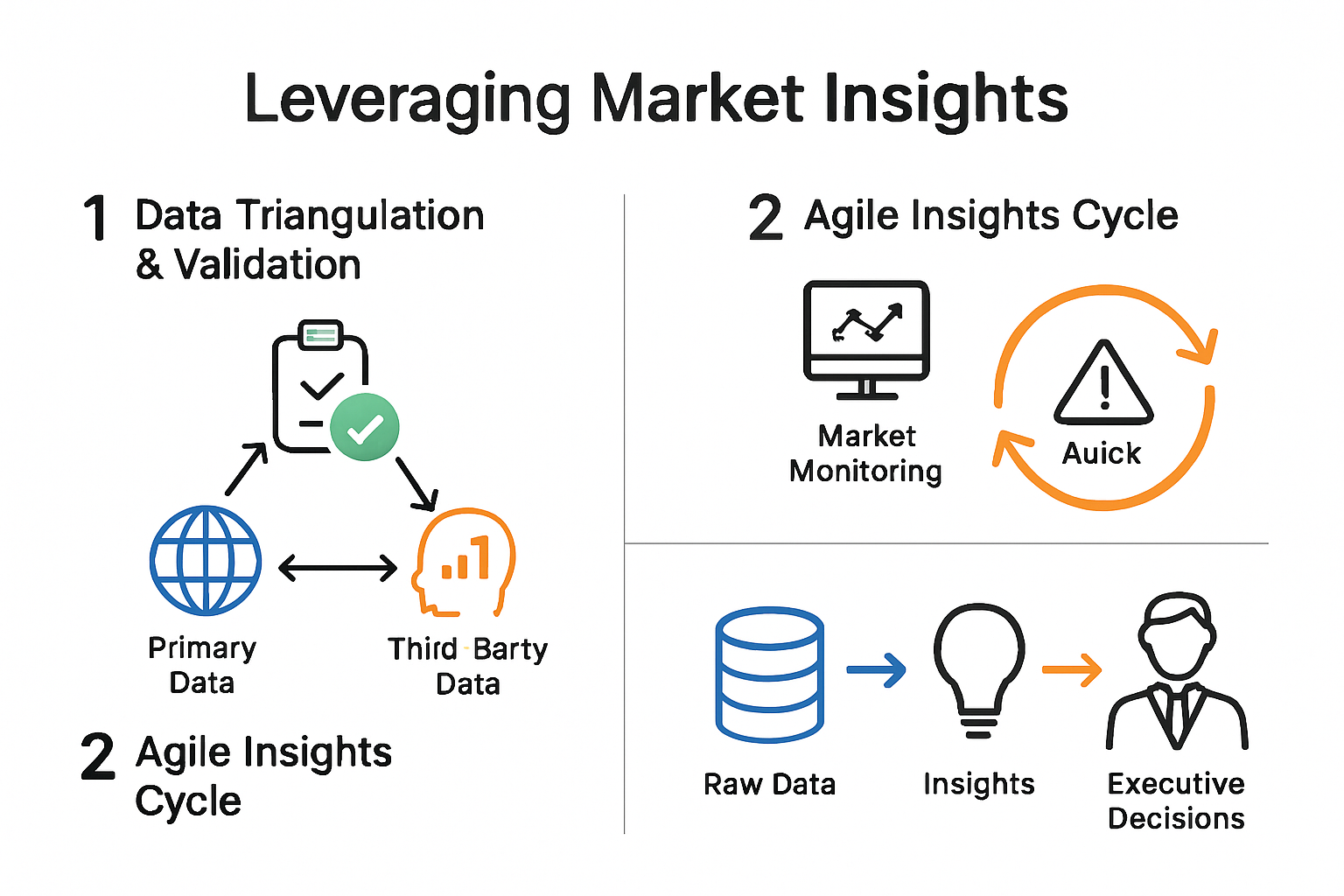
Combining quantitative research with qualitative insights
Cross referencing data from multiple independent sources
Continuously validating findings through stakeholder engagement
Identifying potential biases in data collection methods
The goal is not just to collect information, but to develop a nuanced, contextual understanding of technological trends, customer behaviors, and emerging market opportunities. Learn more about strategic client acquisition techniques that can complement this insight driven approach.
Agile Insight Integration
Traditional market analysis approaches often suffer from rigidity and delayed responsiveness. Modern IT professionals require an agile methodology that allows for rapid insight integration and strategic pivoting. This dynamic approach involves:
Implementing continuous market monitoring systems
Creating flexible strategic frameworks
Developing rapid response mechanisms
Establishing regular insight review and adaptation processes
Agile insight integration means treating market intelligence as a living, breathing ecosystem rather than a static report. Organizations that can quickly interpret and act on market insights gain significant competitive advantages in rapidly evolving technological landscapes.
Strategic Decision Making Framework
Transforming market insights into meaningful organizational action requires a structured decision making framework. Successful IT leaders develop systematic approaches that:
Align market insights with organizational strategic objectives
Create clear decision making criteria
Establish metrics for measuring insight effectiveness
Develop organizational learning mechanisms
Promote a culture of data driven innovation
This framework should not be a rigid process, but a flexible mechanism that allows for nuanced interpretation and strategic creativity. The most effective organizations view market insights as a collaborative process involving multiple stakeholders and perspectives.
Ultimately, leveraging market insights is about creating a proactive rather than reactive organizational culture. IT professionals who master the art of transforming complex market data into strategic advantage position themselves and their organizations at the forefront of technological innovation and market responsiveness.
Below is a summary table highlighting best practices for leveraging market insights, providing a quick reference for IT professionals to integrate these strategies into their processes.
Best Practice | Description |
Data Triangulation | Use multiple data sources for a well-rounded perspective |
Cross-referencing Data | Compare findings from different methods to validate results |
Stakeholder Engagement | Validate insights with continuous input from key stakeholders |
Agile Methodology | Rapidly integrate new insights and adjust strategies as markets evolve |
Continuous Monitoring | Implement systems to track ongoing market changes |
Clear Decision Criteria | Establish clear standards for data-driven decision making |
Organizational Learning | Promote a culture that uses insights for ongoing innovation and strategic improvements |
Frequently Asked Questions
What is market analysis consulting, and why is it important for IT professionals in Canada and the USA?
Market analysis consulting provides IT professionals with critical insights into market trends, competition, and customer needs. This information enables organizations to make informed strategic decisions, mitigate risks, and identify growth opportunities in the rapidly changing technology landscape.
How can market analysis consulting help IT firms in optimizing their resources?
Market analysis consulting offers detailed insights into market segments and technological trends, allowing IT firms to allocate their resources more intelligently. This leads to better investment decisions in product development, talent acquisition, and other critical areas, ultimately maximizing operational efficiency.
What are the key benefits of leveraging market insights for IT decision-making?
The key benefits include enhanced competitive intelligence, enabling firms to anticipate market shifts and customer preferences. By implementing agile insight integration, IT leaders can respond quickly to changes and make data-driven decisions that foster innovation and growth.
How should IT professionals choose the right market analysis consulting partner?
IT professionals should evaluate potential consulting partners based on their expertise, industry experience, and demonstrated success in market analysis. Building trust and collaborative relationships is also essential for effective outcomes, as is ensuring alignment with the organization’s specific strategic goals.
Ready to Turn Market Complexity into Consulting Opportunity?
You have seen how difficult it can be for IT leaders to navigate today’s shifting market, especially when trying to stay ahead of competitors or build a consulting business in Canada and the USA. This article made it clear that many professionals struggle to translate strategic market insights into a steady flow of clients and predictable growth. If you are feeling unsure about where to start or how to avoid costly missteps when launching your solo consulting journey, you are not alone. There is a proven path that can help you bridge the gap from market analysis to real consulting wins.
Action is everything. Visit The Consultant’s Compass for practical frameworks, expert guidance, and real-world resources designed for IT professionals like you. Get insights into finding clients, setting your rates, and building your own competitive advantage using strategies outlined in our solo consulting guide. Start now and get access to the practical bonuses and support you need to confidently launch or grow your consulting practice. Your next step to market-driven consulting success starts today.
Recommended


Comments