


Consultant Business Plan 2025: Guide for IT Professionals in Canada and USA

Building a successful consultant business plan can feel overwhelming for IT professionals, especially in the fast-changing tech environment across Canada and the USA. Here is something surprising. Over 80 percent of new IT consulting businesses that skip a detailed market analysis struggle to find steady clients in their first year. Most people think detailed planning is just bureaucratic paperwork. The real shift? A comprehensive business plan is actually your competitive edge, paving the way for stable growth and real-world results.
Table of Contents
Quick Summary
Key Elements of a Strong Consultant Business Plan
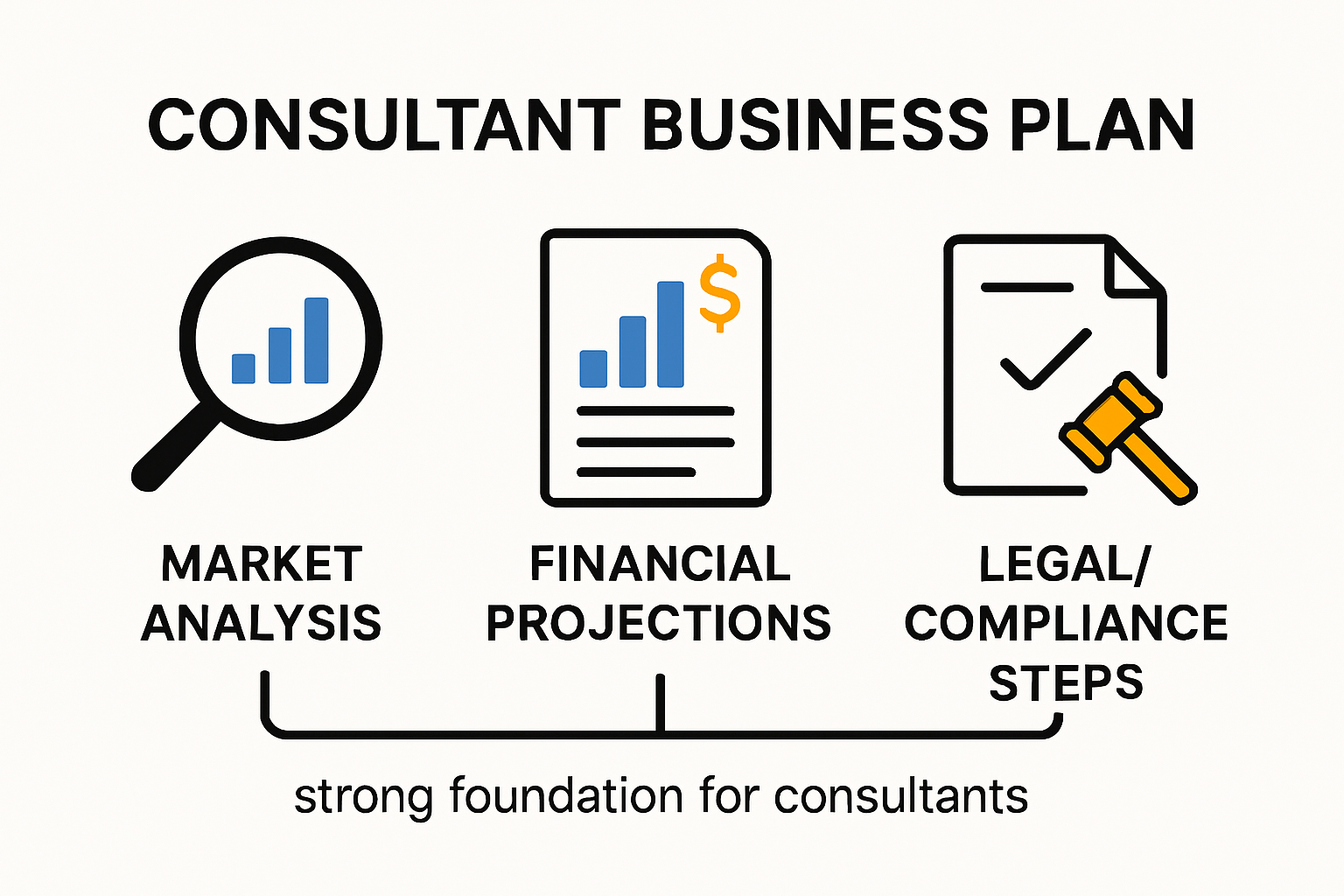
Developing a robust consultant business plan represents the strategic foundation for IT professionals transitioning into independent consulting. A comprehensive plan serves as a navigational compass, guiding professionals through the complex terrain of establishing and growing a successful consulting practice.
Crafting a Comprehensive Market Analysis
A well-structured consultant business plan begins with an in-depth market analysis that provides critical insights into your potential service landscape. Learn more about strategic consulting transitions for IT professionals.
According to research from bizsugar.com, the market analysis should encompass several crucial components:
- Target Audience Identification
: Define precise demographic and professional characteristics of potential clients within the IT consulting sector.
- Industry Trend Assessment
: Evaluate emerging technologies, market demands, and potential service gaps that your consulting practice can address.
- Competitive Landscape Mapping
: Analyze existing consultants in your niche, their service offerings, pricing strategies, and unique value propositions.

Understanding these elements enables IT professionals to strategically position their consulting services and develop targeted marketing approaches that differentiate them in a competitive marketplace.
Financial Projection and Operational Strategy
Financial planning forms the backbone of a credible consultant business plan. Legittai.com research emphasizes the importance of developing a detailed financial framework that demonstrates both sustainability and growth potential.
Key financial considerations include:
- Revenue Modeling
: Develop realistic income projections based on potential client engagement, hourly rates, and service complexity.
- Expense Budgeting
: Comprehensively map out initial and ongoing operational costs, including technology investments, marketing expenses, and professional development.
- Profitability Analysis
: Create multiple scenario models that illustrate potential financial outcomes under different market conditions.
The operational strategy should complement financial projections by outlining service delivery mechanisms, client engagement processes, and scalability plans. This includes defining your consulting methodology, communication protocols, and technological infrastructure required to deliver high-quality IT consulting services.
Unique Value Proposition and Brand Development
A compelling consultant business plan must articulate a clear and distinctive value proposition that sets you apart in the IT consulting marketplace. According to thedeepofnight.icu, this involves more than simply listing technical skills.
Consider developing your unique value proposition by:
Highlighting specialized expertise within specific IT domains
Demonstrating proven methodologies for solving complex technological challenges
Showcasing past successful client engagements and quantifiable results
Articulating your distinctive approach to problem-solving and client collaboration
By meticulously crafting each section of your business plan with strategic insights, financial rigor, and a compelling value narrative, IT professionals can create a robust blueprint for consulting success. Remember, a strong business plan is not a static document but a dynamic roadmap that evolves with your professional journey.
Setting Clear Goals for IT Consulting Success
Successful IT consulting requires more than technical expertise it demands strategic goal setting that transforms technical skills into a sustainable and profitable business model. Discover strategies for consulting transitions that align professional aspirations with market opportunities.
Short Term and Long Term Strategic Objectives
Goal setting for IT consultants involves creating a nuanced framework of objectives that balance immediate revenue generation with sustainable professional growth. Professionals must distinguish between short term tactical goals and long term strategic aspirations.
Short term goals typically include:
- Client Acquisition
: Securing initial consulting contracts within the first 90 days
- Revenue Benchmarks
: Establishing baseline monthly income targets
- Professional Network Expansion
: Building strategic connections within IT professional circles
- Service Portfolio Development
: Defining and refining initial service offerings
Long term objectives should focus on:
Building a reputation as a specialized IT consulting expert
Creating scalable service models
Developing recurring revenue streams
Establishing thought leadership in specific technological domains
To help compare short-term tactical goals and long-term strategic objectives, see the following table:
Quantifiable Performance Metrics
Transforming goals from abstract concepts to actionable strategies requires implementing robust performance measurement systems. According to research from project management experts, successful consultants utilize specific quantifiable metrics to track progress and adjust strategies.
Key performance indicators for IT consultants should include:

- Financial Metrics
: Monthly revenue, profit margins, client acquisition cost
- Operational Metrics
: Project completion rates, client satisfaction scores
- Professional Development Metrics
: Skills acquired, certifications obtained
- Marketing Performance
: Lead generation rates, conversion percentages
The following table summarizes key performance indicators recommended in the content:
Strategic Goal Alignment and Continuous Adaptation
The most effective consulting goals remain flexible and responsive to market dynamics. Pricing strategy research suggests that goal setting is an iterative process requiring regular reassessment and strategic pivoting.
Successful goal alignment involves:
Quarterly performance reviews
Regular market trend analysis
Continuous skills upgrading
Maintaining a growth mindset
IT professionals transitioning into consulting must recognize that goal setting is not a one time exercise but a continuous journey of strategic refinement. By establishing clear, measurable objectives and maintaining adaptability, consultants can create a robust framework for sustained professional success in the dynamic IT consulting marketplace.
Financial Planning and Pricing Strategies for IT Consultants
Financial planning represents the critical foundation of a successful IT consulting practice, requiring strategic thinking and sophisticated pricing approaches that maximize profitability while maintaining market competitiveness. Explore comprehensive pricing strategies tailored for IT professionals.
Developing a Robust Pricing Framework
According to research from ResearchGate, value-based pricing emerges as a sophisticated approach for IT consultants, moving beyond traditional hourly rate models. This strategy focuses on the perceived value delivered to clients rather than simply charging for time spent.
Key components of an effective pricing framework include:
- Hourly Rate Calculation
: Establishing a baseline rate that covers operational costs, professional expertise, and desired profit margins
- Project Based Pricing
: Developing fixed price packages for specific service deliverables
- Value Based Pricing
: Structuring fees around the tangible business outcomes generated for clients
- Retainer Models
: Creating ongoing service arrangements with predictable monthly revenues

Revenue Diversification and Risk Management
Research from Gridlex highlights the importance of performance-based pricing models that align consultant compensation with client outcomes. This approach introduces multiple revenue streams and mitigates financial risks associated with traditional billing methods.
Strategies for revenue diversification include:
Developing tiered service packages
Creating scalable consulting offerings
Implementing performance-linked compensation structures
Establishing recurring revenue models through long-term client engagements
Financial Planning and Operational Sustainability
Research from Laplage Academy emphasizes the critical nature of comprehensive financial planning for independent IT consultants.
Essential financial planning considerations include:
Maintaining robust emergency funds covering 6-12 months of operational expenses
Implementing sophisticated tax planning strategies
Tracking key financial performance indicators
Regularly reviewing and adjusting pricing strategies based on market dynamics
Learn more about consulting payment structures to optimize your financial approach. Successful IT consultants recognize that financial planning extends beyond simple revenue generation it represents a strategic approach to building a sustainable, profitable professional practice that delivers exceptional value to clients while securing personal financial stability.
Legal and Compliance Steps in Canada and USA
Navigating the complex legal and compliance landscape is crucial for IT consultants operating in Canada and the United States. Explore essential compliance strategies to protect your consulting business and ensure professional integrity.
Business Structure and Legal Registration
Establishing a proper legal foundation is the first critical step for IT consultants. According to Canadian government resources, professionals have multiple options for business structures:
- Sole Proprietorship
: Simplest structure with minimal regulatory requirements
- Incorporated Business
: Provides personal liability protection
- Partnership
: Allows shared business responsibilities and resources
- Limited Liability Company (LLC)
: Offers flexibility and liability protection
Each structure carries unique tax implications and legal responsibilities. Consulting with a local legal professional can help determine the most appropriate approach for your specific circumstances.
The table below summarizes key features of each business structure option mentioned:
Regulatory Compliance and Data Protection
Research from FINTRAC highlights the importance of comprehensive compliance policies for IT consultants. Key regulatory considerations include:
- Data Privacy Regulations
: Adhering to PIPEDA in Canada and CCPA in the United States
- Cybersecurity Protocols
: Implementing robust security measures to protect client information
- Professional Liability Insurance
: Protecting against potential legal and financial risks
- Industry-Specific Compliance
: Following regulations like HIPAA for healthcare and PCI DSS for financial services
According to IT Governance USA, successful compliance requires:
Regular risk assessments
Comprehensive employee training programs
Documented security protocols
Ongoing monitoring and adaptation of compliance strategies
Tax Considerations and Professional Obligations
Competition Bureau Canada emphasizes the importance of creating a robust compliance culture. For IT consultants, this includes:
Accurate income reporting
Understanding cross-border tax obligations
Maintaining detailed financial records
Implementing transparent billing and invoicing practices
Additional professional obligations include:
Obtaining necessary professional certifications
Maintaining ongoing professional development
Adhering to ethical standards of practice
Securing appropriate professional insurance coverage
Successful IT consultants recognize that legal and compliance steps are not mere bureaucratic requirements but strategic investments in long-term business sustainability and professional credibility. By proactively addressing these considerations, consultants can build trust with clients, minimize potential risks, and create a solid foundation for their consulting practice.
Frequently Asked Questions
What are the key elements of a consultant business plan for IT professionals?
A comprehensive consultant business plan should include a thorough market analysis, financial projections, a unique value proposition, operational strategies, and clearly defined goals.
How important is market analysis for IT consulting success?
Market analysis is crucial as it helps identify target clients, industry trends, and competitors, enabling IT consultants to strategically position their services in a competitive market.
What financial planning strategies should IT consultants consider?
IT consultants should focus on developing a robust pricing framework, creating realistic revenue models, budgeting for expenses, and implementing risk management practices for financial sustainability.
What legal steps do IT consultants need to take in Canada and the USA?
IT consultants must choose an appropriate business structure, ensure regulatory compliance regarding data protection, and consider tax implications specific to their consulting practice.
Ready to Transform Your IT Consulting Plans into Real-World Success?
Feeling overwhelmed by business planning, financial modelling or legal compliance? You are not alone. Many IT professionals in Canada and the USA face the same challenges highlighted in this article. Turning expertise into a stable consulting business means solving for steady clients, strategic financial planning and meeting compliance demands. The strategies here are a foundation, but real success comes from actionable steps and experienced guidance.
Start bridging the gap between planning and action now. Visit The Consultant’s Compass for proven frameworks, customizable rate calculators, and the no-nonsense guidance you need to avoid costly mistakes and accelerate your consulting journey. If you want to stop guessing and start building a business with freedom and control, discover how the bestselling guide and bonuses can help you launch with confidence. Take your next step towards a thriving consulting practice today—make your business plan work for you, starting now.
Recommended
- Transition to Consulting: A Guide for IT Professionals Canada & USA 2025
- Remote Consulting Explained: A Guide for IT Pros in Canada & USA 2025
- Workplace Watch: The Slow Fade of Remote Work in Canada
- Strategic Planning Consulting for IT Pros: Canada & USA 2025
- Independent Consultant Meaning for IT Professionals (2025 Guide)
- Pricing Consulting Services: A Guide for IT Professionals Canada & USA 2025
Comments