


Top International Consulting Tips for IT Pros Canada and USA 2025

Updated: Aug 6, 2025

International consulting for IT pros in Canada and the USA is becoming more complex every year. The surprising part is how quickly the landscape shifts—over 60 percent of global IT projects now require adapting to at least three sets of regulatory and technology standards. Most people think mastering new tech is the toughest challenge. The reality is that understanding cultural cues and building trust across borders can be even trickier and are now the real skills that set top consultants apart.
Table of Contents
Quick Summary
Takeaway | Explanation |
Effective communication overcomes cultural barriers | Use tailored communication strategies to bridge language and cultural gaps in global IT consulting. |
Adapt technology solutions to local standards | Recognize and reconcile regional technology standards to ensure successful integration and compliance in international projects. |
Build trust through cultural understanding | Demonstrating cultural intelligence and respect helps establish credibility with international clients and fosters long-term partnerships. |
Balance synchronous and asynchronous communication | Implement flexible communication methods to accommodate diverse time zones and preferences within remote teams for better collaboration. |
Develop strong legal knowledge for compliance | Cultivate an understanding of local regulations and legal frameworks to navigate international consulting effectively and maintain professional integrity. |
Understanding Key Global Consulting Challenges
IT professionals navigating international consulting face a complex web of challenges that demand strategic insight and adaptable approaches. Global consulting requires more than technical expertise it demands nuanced understanding of cross-border dynamics, technological landscapes, and organizational complexities.
Communication and Cultural Barriers in Global IT Consulting
Effective international consulting hinges on communication that transcends linguistic and cultural boundaries. The Project Management Institute highlights significant obstacles IT professionals encounter when working across different geographies. Language differences can create misunderstandings that derail project timelines and compromise deliverable quality. Cultural nuances impact communication styles, decision making processes, and professional interactions.
Successful global consultants develop robust communication strategies that include:
Active listening techniques tailored to specific cultural contexts
Clear documentation in multiple languages
Using visual communication tools to bridge potential comprehension gaps
Investing time in understanding local business etiquette and communication norms
Technology Standardization and Integration Challenges
Research in Information & Management underscores the critical importance of understanding country specific technology priorities. IT professionals must navigate complex technological ecosystems where integration standards vary dramatically across regions. Multinational companies require consultants who can seamlessly adapt technical solutions to diverse technological infrastructures.
Key technological integration challenges include:
Reconciling different network and telecommunications standards
Ensuring compatibility of enterprise application systems
Managing data privacy and security regulations across jurisdictions
Implementing mobile and cloud technologies with region specific constraints
Regulatory and Compliance Considerations
Canadian government consulting research reveals the intricate legal landscape global IT consultants must navigate. Professional regulations, tax implications, and service delivery standards differ significantly between countries. Consultants must develop comprehensive understanding of local legal frameworks to ensure compliance and maintain professional credibility.
To successfully manage these challenges, IT professionals should:
Develop robust legal and regulatory knowledge specific to target markets
Build networks with local legal and compliance experts
Implement flexible consulting frameworks that accommodate regional variations
Maintain meticulous documentation of cross border professional engagements
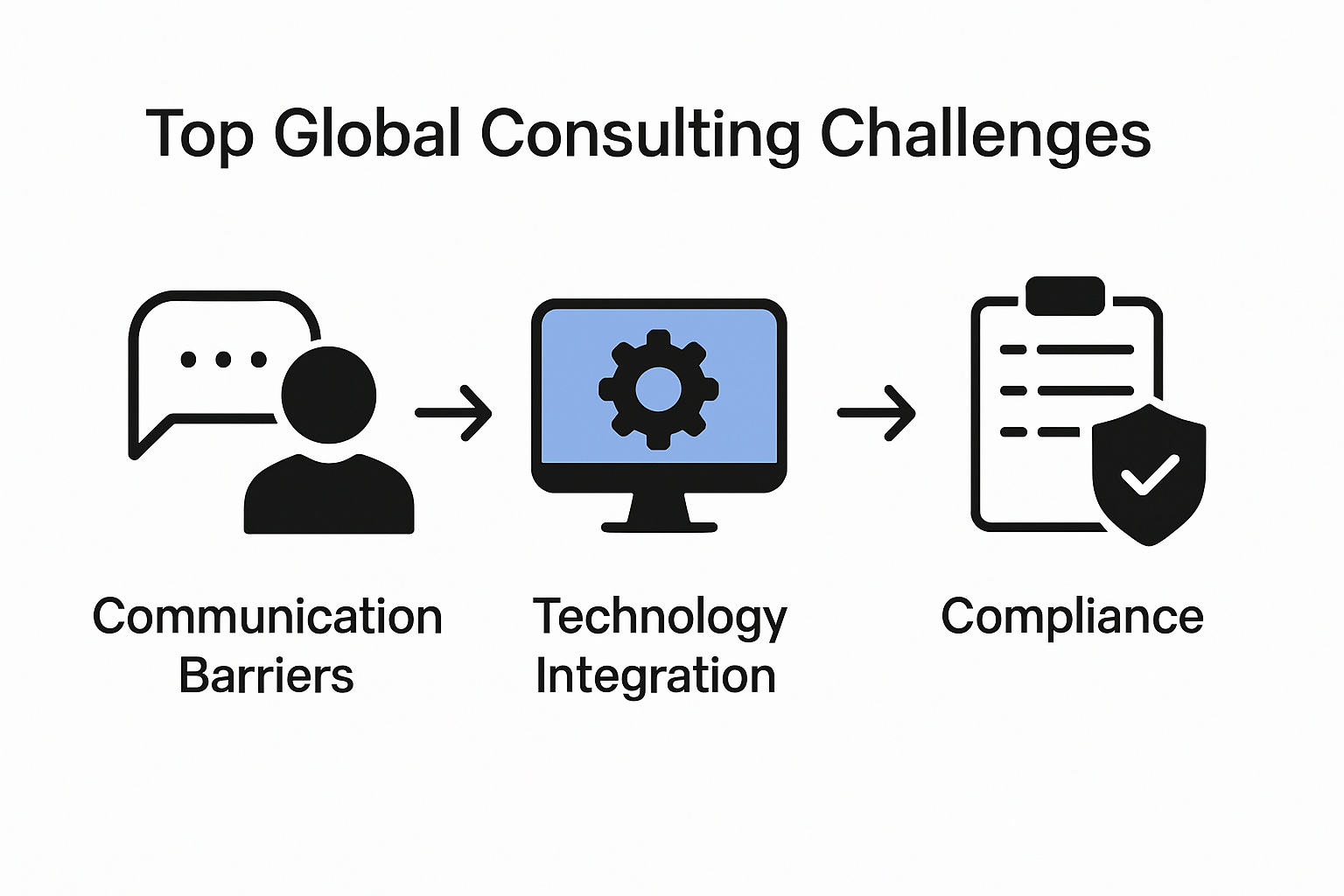
To clarify the main categories of global consulting challenges IT professionals encounter, the following summary table organizes the key issues discussed above:
Challenge Category | Key Issues/Considerations |
Communication & Cultural Barriers | Language differences, cultural nuances, miscommunication, business etiquette |
Technology Standardization & Integration | Varying tech priorities, interoperability, regional tech infrastructure, mobile/cloud constraints |
Regulatory & Compliance | Legal frameworks, tax implications, professional standards, local regulations |
By recognizing and proactively addressing these global consulting challenges, IT professionals can transform potential obstacles into opportunities for innovative problem solving and professional growth. Our comprehensive guide on international consulting trends provides deeper insights into navigating these complex professional landscapes.
Building Trust with International Clients
Trust serves as the foundational currency in international consulting, particularly for IT professionals working across diverse global markets. Establishing credibility requires a sophisticated approach that goes beyond technical competence and addresses the nuanced expectations of international clients.
Demonstrating Competence and Cultural Intelligence
Research from the National Center for Biotechnology Information reveals that trust in global professional environments emerges through transparent communication and consistent performance. IT consultants must signal their expertise while simultaneously demonstrating cultural awareness and adaptability.
Key strategies for building professional credibility include:
Providing detailed project portfolios showcasing international experience
Highlighting successful cross-cultural project implementations
Developing multilingual communication capabilities
Displaying deep understanding of regional technological ecosystems
Establishing Transparent Communication Frameworks
The Journal of Organizational Behavior emphasizes that cross-cultural trust develops through a combination of competence signaling, ethical behavior, and mutual goal identification. Successful international consultants create robust communication infrastructures that prioritize clarity, predictability, and consistent engagement.
Effective communication approaches involve:
Regular scheduled check-ins using client preferred communication platforms
Comprehensive documentation in multiple languages
Detailed progress reporting with clear metrics and benchmarks
Proactive problem identification and resolution strategies
Navigating Cultural Expectations and Professional Norms
Understanding and respecting cultural nuances represents a critical component of international client relationships. Consultants must move beyond generic cross-cultural training and develop genuine insights into specific regional business practices, communication styles, and professional expectations.
Strategies for cultural navigation include:
Investing time in understanding local business etiquette
Adapting presentation and communication styles to regional preferences
Recognizing and respecting different decision making processes
Demonstrating flexibility and genuine respect for diverse working approaches
Successful international consulting requires a holistic approach that balances technical expertise with emotional intelligence and cultural sensitivity. Our in-depth guide on client interviewing techniques offers additional strategies for building strong professional relationships across global markets.
By consistently demonstrating technical proficiency, ethical conduct, and cultural understanding, IT professionals can transform potential communication barriers into opportunities for meaningful collaboration and long term client partnerships.
Navigating Legal and Cultural Differences
IT professionals operating in international consulting face a complex landscape of legal and cultural challenges that demand strategic navigation and nuanced understanding. Successfully bridging these differences requires more than surface level awareness it demands deep comprehension of regulatory frameworks and cultural dynamics.
Understanding Intercultural Professional Dynamics
Research from global software development studies reveals that managing cultural differences requires systematic approaches and proactive strategies. Successful international consultants develop comprehensive knowledge bases that help anticipate and mitigate potential misunderstandings.
Key intercultural competence strategies include:
Creating detailed cultural knowledge repositories
Developing adaptive communication protocols
Implementing cross cultural training programs
Establishing clear conflict resolution mechanisms
Legal Frameworks and Regulatory Compliance
Emerging market research highlights the critical importance of understanding local legal structures when operating across borders. IT consultants must develop comprehensive understanding of tax regulations, business licensing requirements, and professional standards in different jurisdictions.
Complex legal considerations encompass:
International tax compliance strategies
Professional liability and insurance requirements
Data protection and privacy regulations
Contractual frameworks across different legal systems
Professional Adaptability and Emotional Intelligence
International education research emphasizes that successful global professionals must cultivate deep emotional intelligence and adaptability. This goes beyond technical skills and requires genuine commitment to understanding diverse professional contexts.
Strategies for developing professional adaptability include:
Practicing active and empathetic listening
Developing cultural humility
Remaining flexible in professional interactions
Continuously learning about global business practices
To help summarize the main strategies for navigating legal and cultural differences, the following table presents key focus areas and effective approaches discussed in this section:
Focus Area | Effective Approaches |
Intercultural Professional Dynamics | Knowledge repositories, adaptive protocols, cross-cultural training, conflict resolution |
Legal & Regulatory Compliance | Tax strategies, liability insurance, privacy regulations, varied contracts |
Professional Adaptability & Intelligence | Empathetic listening, humility, flexibility, continual learning |
Navigating legal and cultural differences demands ongoing learning and genuine commitment to understanding complex global professional ecosystems. Our comprehensive guide on international consulting strategies provides deeper insights into managing these intricate professional challenges.
By approaching international consulting with curiosity, respect, and strategic preparation, IT professionals can transform potential barriers into opportunities for meaningful global collaboration.
Effective Communication for Remote Teams
Remote team communication represents a critical skill for IT professionals operating in global consulting environments. Successful remote collaboration demands strategic approaches that transcend traditional workplace communication models and leverage technological tools with precision and intentionality.
Technology-Enabled Communication Strategies
A comprehensive study from MIT Sloan Management Review reveals that effective remote communication requires deliberate technology selection and structured interaction protocols. IT consultants must curate communication platforms that facilitate seamless information exchange while maintaining professional engagement.
Key technological communication strategies include:
Selecting multi functional collaboration platforms
Implementing real time translation capabilities
Creating standardized communication workflows
Establishing clear digital communication etiquette guidelines
Synchronous and Asynchronous Communication Balance
Research from the Journal of Global Information Management highlights the importance of balancing synchronous and asynchronous communication methods. Successful remote teams develop flexible communication approaches that accommodate diverse time zones and individual work preferences.
Effective communication balance involves:
Scheduling strategic synchronous meeting windows
Developing comprehensive asynchronous documentation systems
Creating clear response time expectations
Utilizing project management tools with robust tracking capabilities
Building Team Connection and Trust Remotely
Global Workforce Research from Harvard Business Review demonstrates that remote team trust requires intentional relationship building strategies. IT consultants must create virtual environments that foster genuine connections and maintain team cohesion despite physical distance.
Strategies for remote team connection include:
Implementing regular virtual social interactions
Creating opportunities for informal digital communication
Developing transparent performance tracking systems
Encouraging cross cultural knowledge sharing
Navigating remote team communication requires continuous learning and adaptation. Our comprehensive guide on remote collaboration techniques provides additional insights for IT professionals seeking to enhance their virtual team capabilities.
By approaching remote communication with strategic intentionality, technical proficiency, and genuine human connection, IT consultants can transform potential communication challenges into opportunities for innovative global collaboration.

Frequently Asked Questions
What are the key challenges in international consulting for IT professionals?
International consulting for IT professionals involves navigating communication and cultural barriers, technology standardization and integration challenges, and regulatory and compliance considerations across different countries.
How can IT consultants build trust with international clients?
Building trust with international clients involves demonstrating cultural intelligence, establishing transparent communication frameworks, and effectively navigating cultural expectations and professional norms relevant to each region.
What strategies should be used for effective communication in remote teams?
Effective communication in remote teams includes utilizing technology-enabled communication strategies, balancing synchronous and asynchronous communication, and fostering team connection and trust through regular virtual interactions.
Why is understanding local legal frameworks important for IT consultants?
Understanding local legal frameworks is crucial for IT consultants to ensure compliance with regulations, manage tax implications, and align with service delivery standards specific to each country, thus maintaining professional credibility.
Ready to Overcome International Consulting Challenges?
The journey from mastering tech skills to navigating global consulting hurdles like cultural barriers, regulatory complexities, and building trust can be overwhelming. If you have ever felt lost trying to adapt to new standards or struggled to build strong client relationships overseas, you are not alone. The strategies mentioned in this article, from clear communication to local compliance, are only the starting point. Imagine having step-by-step support, real-world examples, and proven frameworks at your side throughout your consulting career.
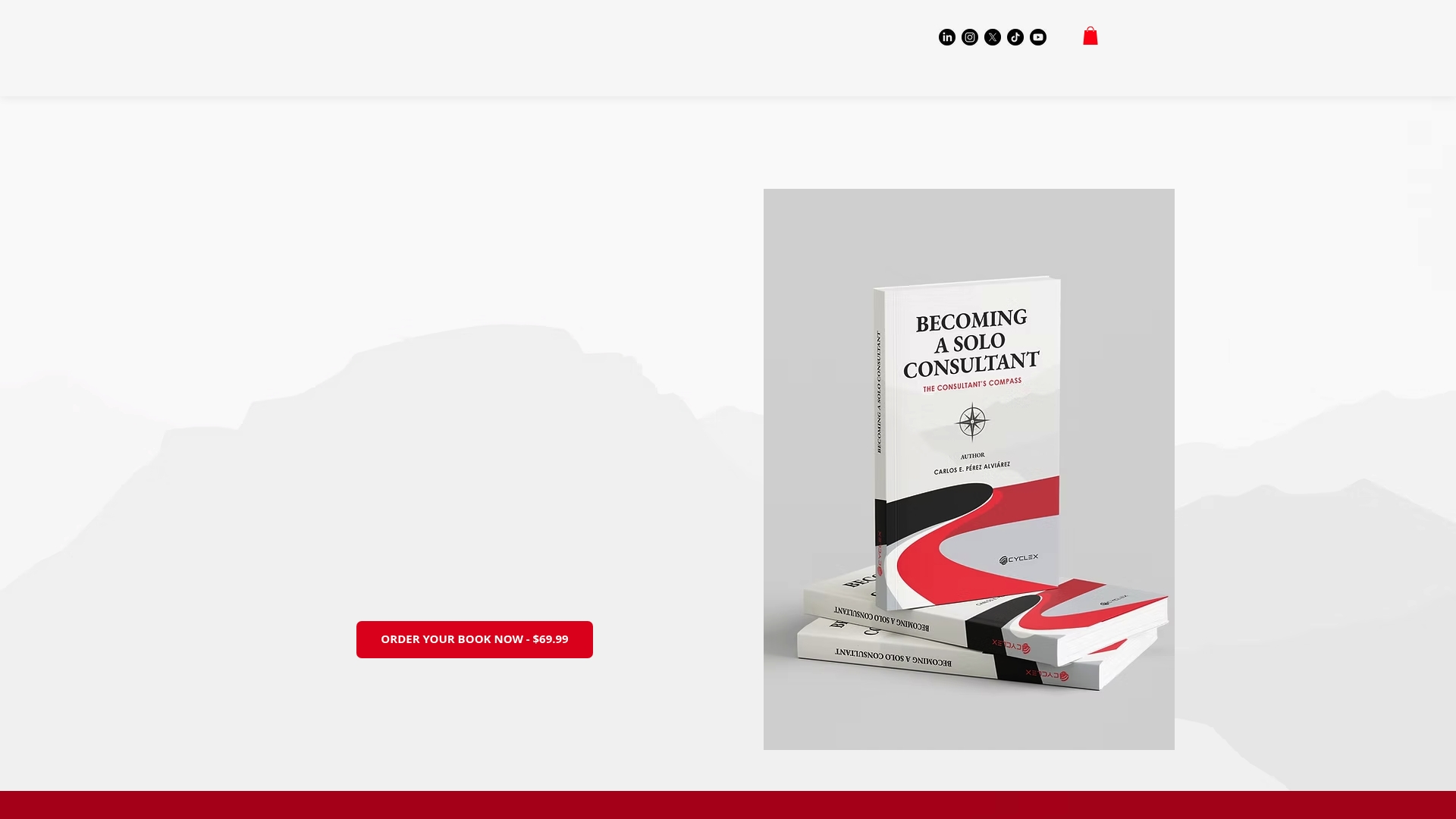
Join The Consultant’s Compass and gain practical guidance designed specifically for IT professionals in Canada and the USA. Explore our bestselling resource, Becoming a Solo Consultant – The Consultant’s Compass, to unlock powerful bonuses like rate calculators and contract guides built for complex, cross-border work. Do not wait until your next project runs into unexpected obstacles. Get the support to launch or grow your consulting business with confidence right now at The Consultant’s Compass.
Recommended
Comments