


Master Consultant Client Management for IT Professionals
- Carlos Perez Alviarez

- Aug 20, 2025
- 10 min read
Updated: Aug 22, 2025

Setting up standout client management as an IT consultant can feel overwhelming for anyone juggling technical work and relationship-building at the same time. Yet, research shows that consultants who use targeted methods can achieve over a 90 percent client satisfaction rate. Most believe it is all about staying on top of emails and meetings. Turns out, the real advantage comes from building clear goals, mapping stakeholder needs, and actually measuring how clients feel about your work. That is what separates the good from the unforgettable.
Table of Contents
Quick Summary
Key Point | Explanation |
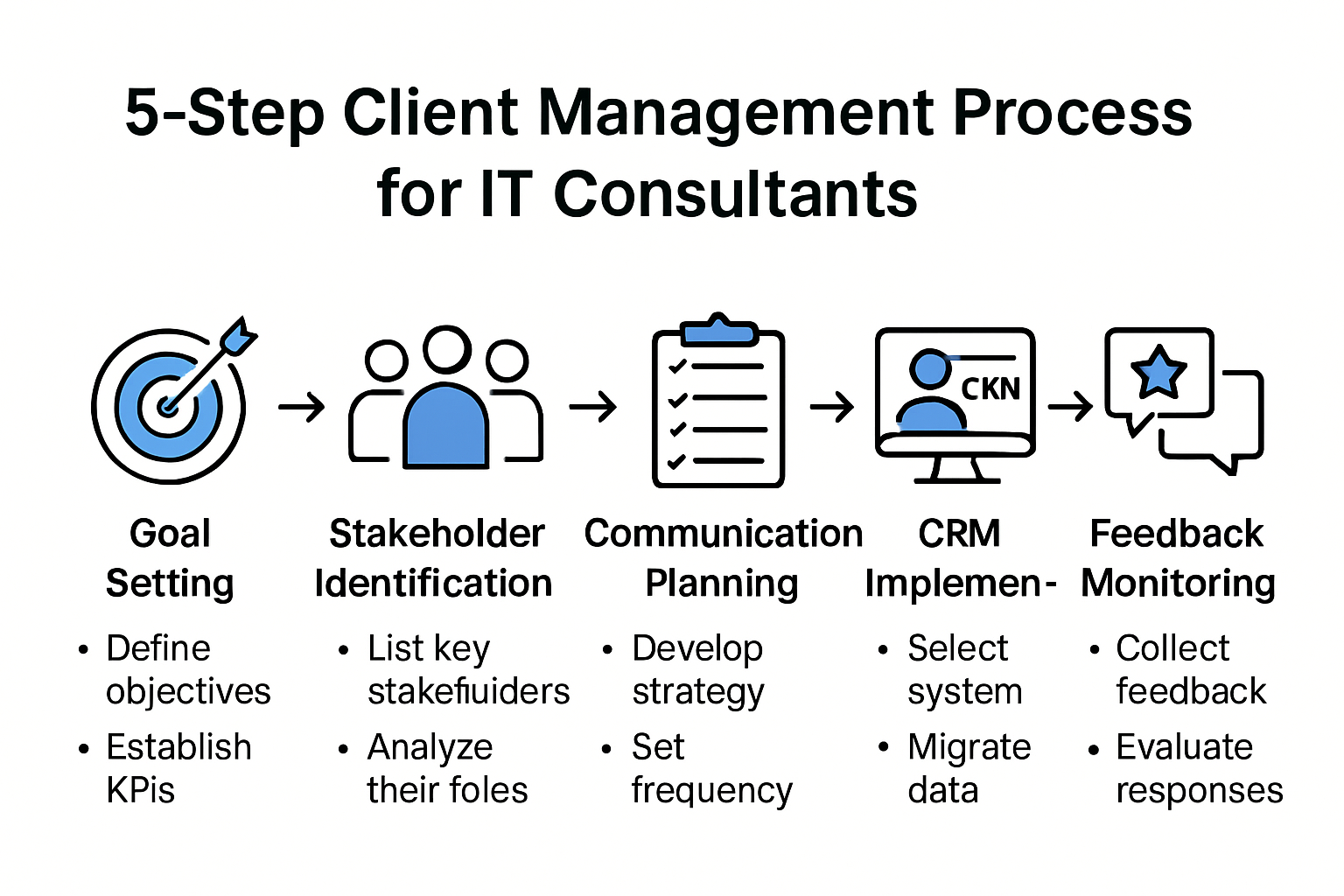
1. Define Clear Client Management Goals | Establish measurable goals to guide every interaction and project successfully. Use the SMART framework for effective clarity. |
2. Identify and Engage Key Stakeholders | Understand stakeholder needs through structured discovery conversations, enhancing strategic relationship management. |
3. Develop a Comprehensive Communication Plan | Create a tailored communication framework ensuring timely updates and transparency with stakeholders, adapted to their preferences. |
4. Implement Effective CRM Tools | Utilize client relationship management tools to improve interactions, track progress, and centralize vital information for strategic insights. |
5. Monitor Feedback and Adapt Strategies | Systematically gather feedback through various channels to promote continuous improvement and enhance client satisfaction. |
Step 1: Define Your Client Management Goals
Defining clear client management goals is the foundational blueprint for successful IT consulting relationships. Your goals will serve as a strategic compass, guiding every interaction, project scope, and professional engagement. Effective goals transform vague intentions into measurable, actionable strategies that demonstrate your professional commitment and strategic thinking.
Begin by conducting a comprehensive self-assessment of your consulting practice’s current state and desired trajectory. This involves understanding your unique value proposition, technical expertise, and the specific client problems you are best equipped to solve. Professional goal setting requires a nuanced approach that balances technical competence with interpersonal relationship management.
Establish your goals using the SMART framework: Specific, Measurable, Achievable, Relevant, and Time-bound. For IT consultants, this might translate to concrete objectives like maintaining a 90% client satisfaction rate, reducing project implementation time by 25%, or securing three long-term enterprise clients within the next fiscal year. Learn more about strategic consulting goals to refine your approach.
Your client management goals should encompass multiple dimensions beyond technical delivery. Consider objectives related to communication frequency, reporting standards, problem resolution timelines, and continuous improvement mechanisms. These goals will help you build trust, predictability, and professional credibility with your clients.
Key verification indicators that you have successfully defined your client management goals include:
A documented goal statement with clear, quantifiable metrics
Alignment between your technical capabilities and client expectations
A systematic approach to tracking and measuring goal performance
Flexibility to adapt goals based on evolving client needs and market dynamics
Below is a checklist summarizing verification steps to ensure you have successfully defined your client management goals. Use this to track your progress when completing Step 1.
Verification Indicator | Description |
Documented Goal Statement | Written statement outlining specific, measurable goals |
Quantifiable Metrics | Each goal includes clear, trackable targets |
Alignment with Expectations | Goals align with both your skills and client needs |
Systematic Tracking Approach | Method is in place to monitor and measure goal progress |
Flexibility for Adjustment | Goals are adaptable to changing client or market circumstances |
Remember, goal setting is not a one-time event but an ongoing strategic process. Regularly review and recalibrate your objectives to ensure they remain relevant and aligned with your professional growth and client requirements.
Step 2: Identify Key Stakeholders and Their Needs
Identifying key stakeholders represents a critical milestone in consultant client management that goes far beyond simple contact documentation. This step transforms your consulting approach from generic service delivery to strategic relationship building. Stakeholders are not just names on a contact list but complex individuals and groups whose expectations, motivations, and influence can dramatically impact project success.
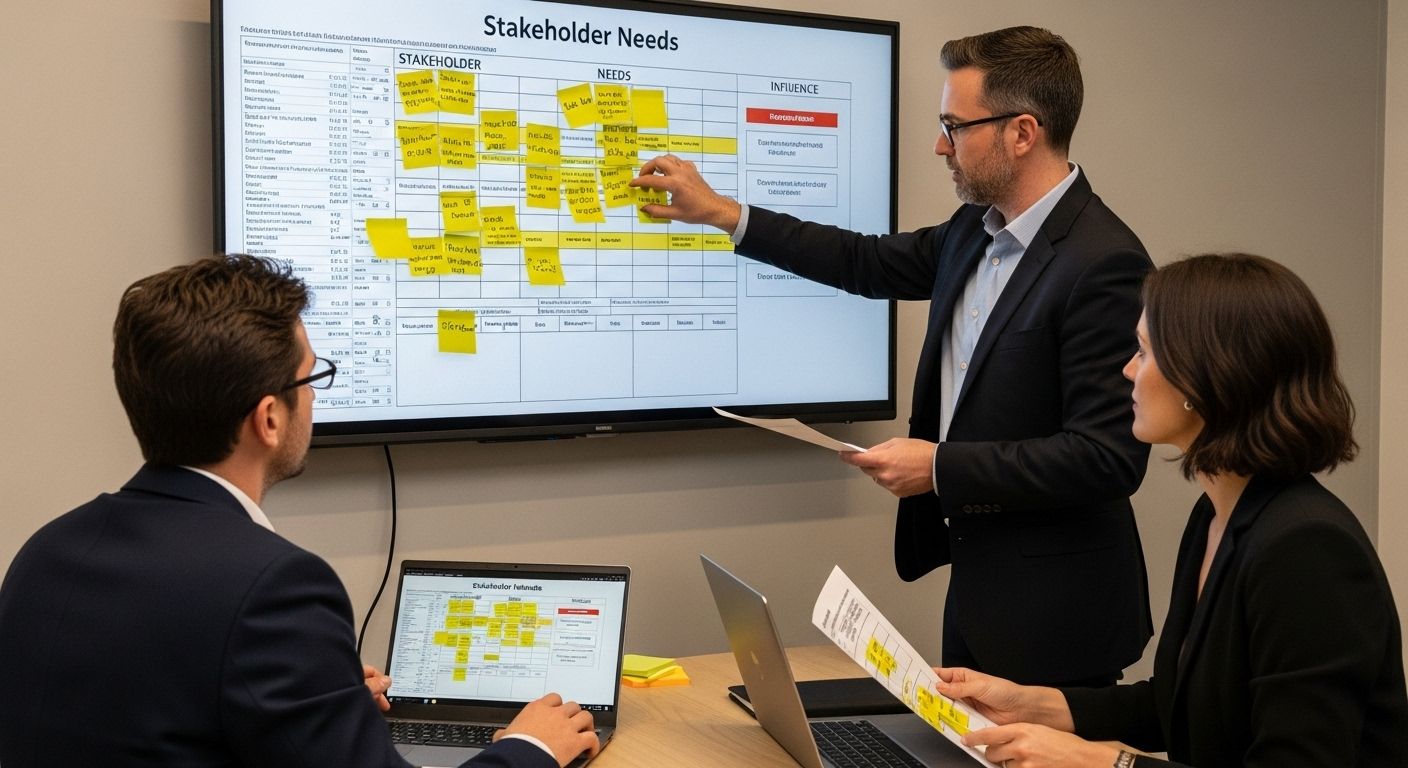
Begin by mapping out your stakeholder landscape comprehensively. This means looking beyond the immediate project sponsors to understand the broader organizational ecosystem. Categorize stakeholders into primary groups such as executive leadership, technical decision makers, end users, and operational support teams. Each stakeholder represents a unique constellation of interests, technical understanding, and organizational power.
Develop a systematic approach to understanding stakeholder needs through targeted discovery conversations. These interactions are not merely informational exchanges but strategic listening sessions designed to uncover underlying motivations, potential challenges, and unspoken expectations. Pay close attention to both verbal communication and organizational context. Explore advanced stakeholder management techniques to refine your approach.
Create a detailed stakeholder analysis matrix that captures critical information beyond surface level contact details. This matrix should include:
Stakeholder name and organizational role
Primary technical or business objectives
Communication preferences and frequency
Potential influence on project outcomes
Specific concerns or potential resistance points
The following table presents a stakeholder analysis matrix template. Use it during Step 2 to document stakeholder roles, objectives, preferences, influence, and challenges for effective relationship management.
Stakeholder | Role in Organization | Main Objectives | Communication Preferences | Potential Influence/Concerns |
Executive Leadership | Sponsor/Decision Maker | Strategic alignment, ROI | Monthly reports, Email | High influence, budget focus |
Technical Lead | Implementation Oversight | Solution feasibility | Weekly standups, Slack | Process risks, resource needs |
End User | Daily Operations | Usability, training | As-needed updates | Adoption resistance |
Support Team | Post-launch support | Issue resolution, uptime | Incident tickets, Email | Workload, response time |
Recognize that stakeholder needs are dynamic and evolving. Your initial mapping is not a static document but a living framework that requires continuous refinement. Successful consultant client management demands ongoing stakeholder engagement and proactive communication. Regular check-ins, transparent reporting, and adaptive communication strategies will help you maintain strong relationships and anticipate potential challenges before they emerge.
Verify the completion of this step by ensuring you have a comprehensive, nuanced understanding of each stakeholder’s unique perspective, technical requirements, and organizational context. Your goal is not just documentation but deep relational intelligence that positions you as a strategic partner rather than a transactional service provider.
Step 3: Develop a Structured Communication Plan
A structured communication plan is the strategic roadmap that transforms potential misunderstandings into collaborative success. This critical step moves beyond basic contact management, creating a comprehensive framework that ensures transparent, timely, and targeted communication with every stakeholder throughout your consulting engagement.
Designing an effective communication plan requires meticulous attention to detail and a deep understanding of each stakeholder’s communication preferences. Start by creating a detailed communication matrix that maps out specific communication channels, frequencies, and content types for different stakeholder groups. Technology professionals require precision, so your plan must account for technical complexity while remaining accessible and clear.
Explore advanced communication strategies to elevate your professional interactions. Your communication plan should be adaptable, recognizing that different stakeholders have unique information needs. Executive leadership might require high-level strategic summaries, while technical teams need granular project details. Develop communication templates that can be quickly customized to match each stakeholder’s specific requirements.
Implement a multi-channel communication approach that leverages various platforms and formats. This might include formal written reports, video conference updates, email briefings, and interactive dashboards. Consistency is key in maintaining stakeholder confidence. Establish clear protocols for communication frequency, response times, and escalation procedures. This demonstrates your professionalism and commitment to transparent project management.
Your communication verification checklist should include:
Documented communication preferences for each stakeholder
Predefined communication templates and delivery mechanisms
Established response time commitments
Mechanisms for tracking and confirming information receipt
Scheduled periodic communication strategy reviews
Remember that a communication plan is not a static document but a dynamic tool that evolves with your project. Regular review and refinement ensure that your communication remains relevant, effective, and aligned with changing project dynamics and stakeholder expectations. Your goal is to create a communication ecosystem that feels both professional and personalized, building trust and demonstrating your commitment to exceptional client management.
Step 4: Implement Client Relationship Management Tools
Implementing robust client relationship management tools transforms your consulting practice from reactive service delivery to proactive strategic partnership. These digital ecosystems are more than mere software solutions they are the technological backbone that enables sophisticated, personalized client interactions across complex project landscapes.
Begin by conducting a comprehensive assessment of your current client management workflow. Identify specific pain points where technology can streamline communication, track project progress, and centralize critical information. The ideal client relationship management tool should integrate seamlessly with your existing technical infrastructure, offering flexibility and scalability that matches the dynamic nature of IT consulting engagements.
Discover advanced client management strategies that leverage cutting-edge technological solutions. Select tools that offer comprehensive features such as contact management, interaction tracking, project milestone monitoring, and customizable reporting capabilities. Professional-grade CRM platforms should provide real-time insights into client interactions, allowing you to anticipate needs, manage expectations, and demonstrate proactive problem-solving capabilities.
Consider implementing multi-dimensional tracking mechanisms that go beyond traditional contact management. Your chosen tools should enable granular documentation of client communications, technical requirements, historical project data, and potential future opportunities. This approach transforms your CRM from a simple contact database into a strategic intelligence platform that supports long-term relationship development.
Your CRM implementation verification checklist should include:
Comprehensive data migration from existing systems
User access and permission configurations
Integration with existing communication and project management platforms
Customized dashboards reflecting key performance indicators
Training protocols for team members
Remember that successful CRM implementation is an ongoing process, not a one-time technology deployment. Regularly review and refine your approach, soliciting feedback from both your team and clients. The most effective client relationship management tools evolve continuously, adapting to changing technological landscapes and client expectations. Your goal is to create a dynamic, intelligent system that positions you as a forward-thinking, technologically sophisticated consulting partner.
Step 5: Monitor Client Feedback and Adapt Strategies
Monitoring client feedback is the strategic compass that guides continuous improvement in your consulting practice. This step transforms passive information gathering into a dynamic, proactive approach to relationship management. By establishing systematic feedback mechanisms, you create an environment of transparency, trust, and ongoing collaboration that distinguishes exceptional consultants from average service providers.
Design a comprehensive feedback collection strategy that goes beyond traditional survey methods. Implement multiple feedback channels that capture nuanced insights across different interaction points. This might include periodic formal reviews, real-time project checkpoint discussions, informal check-ins, and structured digital feedback mechanisms. The goal is to create a 360-degree view of client satisfaction and project performance.
Explore advanced feedback collection techniques to elevate your client management approach. Develop a standardized yet flexible feedback framework that allows clients to provide detailed, constructive input. Use a combination of quantitative rating scales and qualitative open-ended questions to capture both measurable performance metrics and contextual insights that numbers alone cannot reveal.
Create a systematic process for not just collecting feedback, but actively integrating insights into your consulting practice. This requires a disciplined approach to analysis, reflection, and strategic adaptation. Treat each piece of feedback as a valuable opportunity for professional growth, whether the input is positive or constructive. Develop a transparent feedback review protocol that demonstrates your commitment to continuous improvement.
Your feedback monitoring and adaptation verification checklist should include:
Documented feedback collection mechanisms
Standardized analysis and review processes
Clear action planning protocols for addressing client insights
Periodic review of feedback trends and strategic adjustments
Transparent communication about implemented changes
Remember that effective feedback monitoring is an iterative process. The most successful consultants view client input as a collaborative dialogue, not a one-time transaction. Cultivate a mindset of curiosity, humility, and continuous learning. Your ability to listen, understand, and adapt will ultimately differentiate you in a competitive consulting landscape, transforming client relationships from transactional interactions into long-term strategic partnerships.
Step 6: Evaluate Success and Refine Your Approach
Evaluating success is not a mere retrospective exercise but a strategic mechanism for continuous professional evolution. This critical step transforms your consulting practice from a static service into a dynamic, learning-oriented enterprise. Success evaluation goes beyond traditional metrics, demanding a holistic understanding of project outcomes, client relationships, and personal growth trajectories.
Develop a comprehensive evaluation framework that encompasses multiple dimensions of consulting performance. This involves creating nuanced assessment tools that capture both quantitative metrics and qualitative insights. Implement a structured approach that analyzes project deliverables, client satisfaction levels, financial performance, and personal skill development. The most effective evaluations reveal not just what was accomplished, but how it was achieved and where future improvements can emerge.
Explore advanced performance evaluation techniques to enhance your professional assessment strategy. Design evaluation protocols that encourage honest reflection and constructive self-critique. This might include periodic self-assessments, peer reviews, client testimonials, and comparative analyses against your initial project goals. The objective is to create a 360-degree view of your consulting performance that illuminates both strengths and potential areas for development.
Establish a systematic approach to strategy refinement that transforms evaluation insights into actionable improvements. This requires developing a flexible mindset that views each project as a learning opportunity. Create mechanisms for documenting lessons learned, identifying recurring patterns, and implementing targeted skill enhancement strategies. Successful consultants treat their professional development as an ongoing, iterative process of continuous improvement.
Your success evaluation and refinement verification checklist should include:
Documented performance evaluation metrics
Systematic review of project outcomes and client feedback
Personal skill gap analysis and development plan
Quarterly professional growth strategy sessions
Updated consulting methodology based on insights
Remember that true professional mastery emerges not from perfection, but from a committed, curious approach to continuous learning. Your ability to objectively assess performance, extract meaningful insights, and proactively adapt will distinguish you as a sophisticated, client-centric IT consultant. Embrace evaluation not as a judgment, but as a powerful tool for personal and professional transformation.
Ready to Turn Theory Into Real Consulting Success?
You have just explored expert strategies for mastering client management as an IT consultant. Maybe you are feeling the pressure to define clear goals, organize stakeholder communications, or build a reliable feedback system. Many ambitious professionals struggle to turn these best practices into action. Technical knowledge alone is not always enough to win trust and grow your consulting business. You need hands-on tools and mentorship that help you confidently bridge the gap.
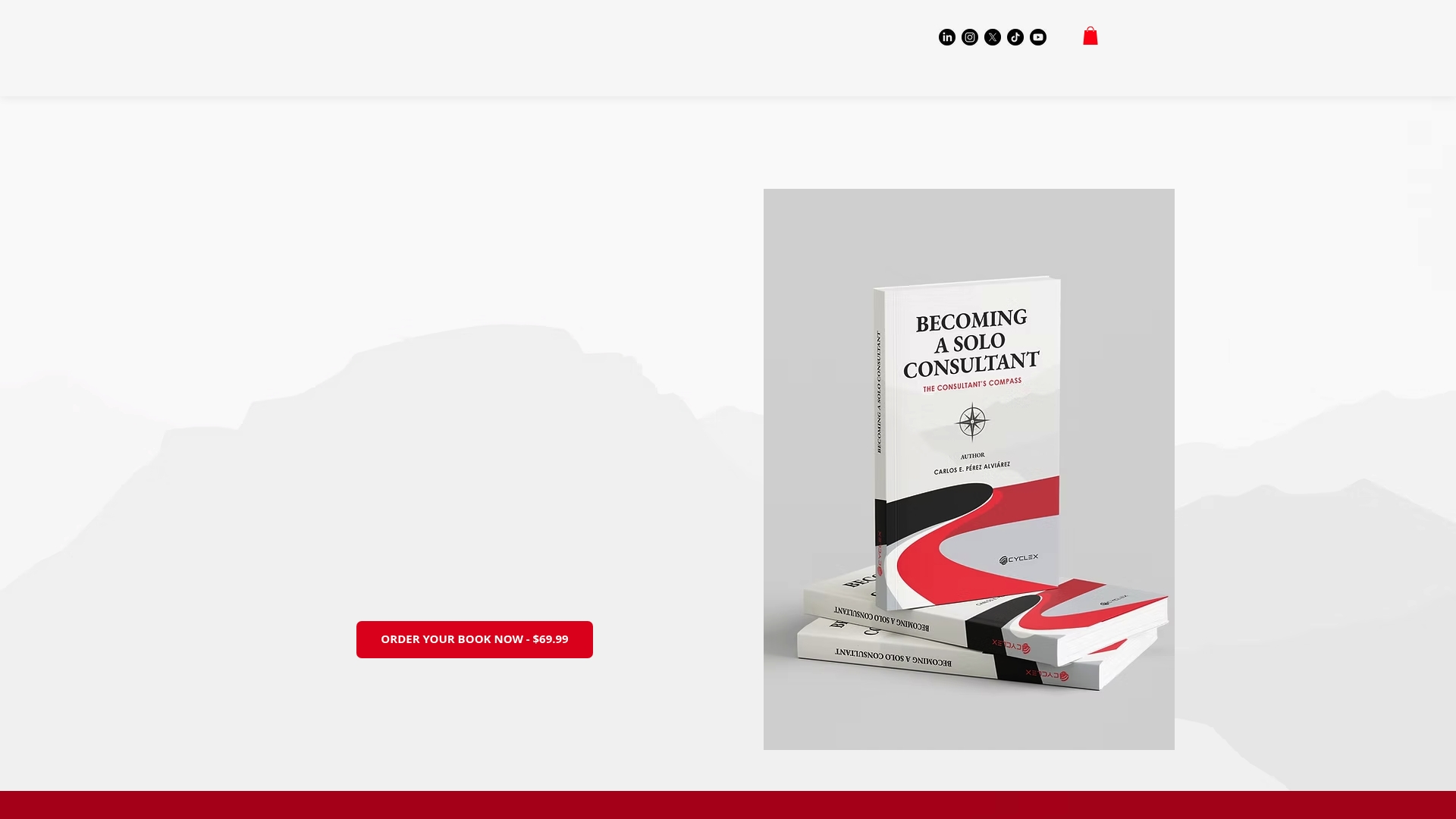
Imagine having direct support from an independent consultant who has faced and solved the same challenges. At The Consultant’s Compass, you will find practical resources that guide you step-by-step. Move beyond the theory in this article and access rate calculators, real proposal templates, and personalized mentorship to accelerate your progress. Visit our site to unlock your bonuses and start building powerful client relationships today. The sooner you act, the faster you gain freedom, security, and control in your solo consulting career.
Frequently Asked Questions
What are SMART goals in client management for IT consultants?
SMART goals are Specific, Measurable, Achievable, Relevant, and Time-bound objectives that guide IT consultants in defining clear targets for client management, ensuring that each goal is actionable and trackable.
How do I identify and understand key stakeholders in IT consulting?
Identifying stakeholders involves mapping out the organizational landscape to categorize individuals based on their roles, objectives, communication preferences, and potential influence on project outcomes, enabling you to tailor strategies to their specific needs.
What elements should be included in a structured communication plan for IT consulting?
A structured communication plan should include a communication matrix specifying channels, frequencies, and content types for different stakeholders, along with protocols for response times and periodic reviews to ensure effective information sharing.
How can feedback monitoring enhance client relationships in IT consulting?
Regularly monitoring client feedback through various channels helps identify satisfaction levels and areas for improvement, fostering transparency and trust, and allowing consultants to adapt strategies that meet evolving client needs.
Recommended
Comments