


Collaborating With Other Consultants: IT Success in 2025

Updated: Jul 24, 2025

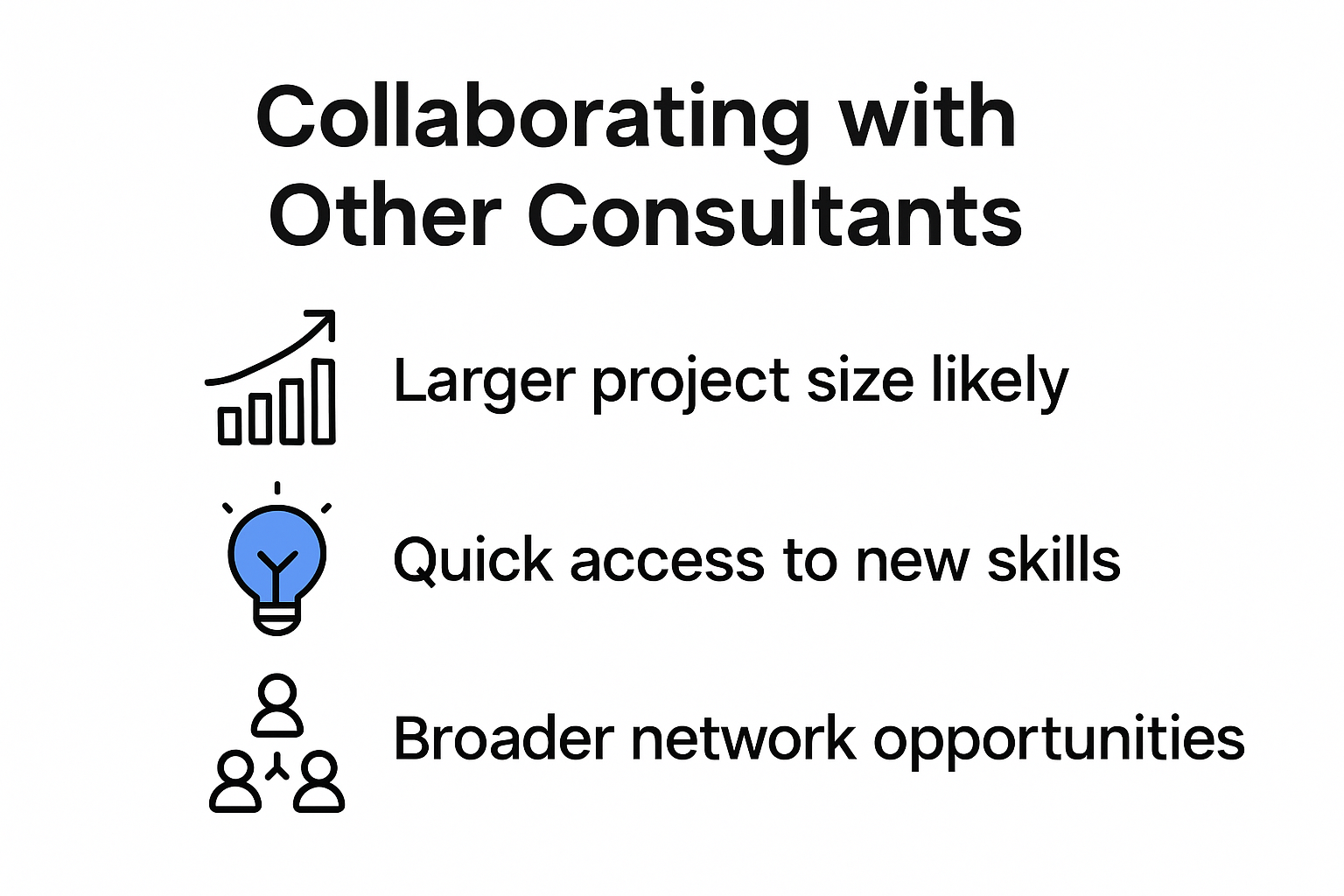
IT consulting in 2025 is all about collaboration and the impact is bigger than many realize. In North America, consultants who collaborate are up to 40 percent more likely to secure larger, more complex projects compared to those working alone. The surprising part is that the real payoff is not just in business growth but in rapid access to new skills and trusted networks, giving consultants a serious edge over the competition.
Table of Contents
Quick Summary
Takeaway | Explanation |
Collaborate for Diverse Expertise | IT consultants should partner with others who have complementary skills, allowing for more comprehensive project solutions and enhanced service offerings. |
Establish Clear Communication Protocols | Successful collaboration depends on defined roles, communication channels, and regular updates to ensure all team members understand their contributions. |
Develop Mutual Respect and Shared Goals | Creating a shared vision among consultants fosters a collaborative mindset, leading to innovative problem-solving and better project outcomes. |
Anticipate and Address Challenges | By proactively managing communication barriers, technical integration issues, and differing professional perspectives, consultants can transform potential conflicts into opportunities for improvement. |
Build Quality Networks | Focus on cultivating meaningful relationships over merely increasing the number of contacts, which will enhance opportunities for collaboration and knowledge sharing. |
Key Benefits of Teaming Up With Consultants
IT professionals seeking to elevate their consulting practice in 2025 must recognize the transformative power of strategic collaboration. Teaming up with other consultants is not just a networking strategy it is a critical pathway to enhanced professional growth, expanded capabilities, and competitive advantage.
Bringing Diverse Expertise to Complex Projects
In the rapidly evolving technological landscape, no single consultant can claim mastery of every domain. Exploring strategic collaboration reveals the immense potential of combining complementary skill sets. According to research from Educause, consulting firms offer a unique blend of expert knowledge and strategic insights that are critical for navigating complex institutional challenges.
By collaborating with consultants who possess specialized skills, IT professionals can tackle more comprehensive and intricate projects. For instance, a cybersecurity expert might partner with a cloud infrastructure specialist to deliver a holistic solution that addresses multiple technological dimensions. This approach not only enhances project outcomes but also demonstrates a more sophisticated service offering to potential clients.
Objective Perspectives and Knowledge Transfer
External consultants bring a crucial asset to the table objectivity. Research from Educause highlights that external consultants can provide unbiased insights, drawing from experiences across various industries and institutional contexts. This broader perspective allows teams to identify opportunities and challenges that might remain invisible to an internal team.
Knowledge transfer becomes exponential when consultants collaborate. Each professional brings unique experiences, methodologies, and problem solving approaches. Through intentional knowledge sharing, consultants can rapidly expand their collective understanding, learn cutting edge techniques, and stay ahead of emerging technological trends.
Expanding Professional Network and Business Opportunities
Collaborating with other consultants is not just about project execution it is a strategic networking mechanism. By building strong professional relationships, consultants create pathways to new business opportunities, referrals, and potential long term partnerships.
As industry research indicates, IT consultants who actively engage in collaborative networks benefit from exposure to diverse technological ecosystems. These connections can lead to joint venture opportunities, shared client referrals, and the ability to bid on larger, more complex projects that would be challenging to secure individually.
In 2025, the most successful IT consultants will be those who understand that collaboration is not a competitive threat but a collaborative advantage. By strategically teaming up, sharing knowledge, and expanding professional networks, consultants can create more value for their clients and themselves.
To help you quickly compare the key benefits discussed, the following table summarizes the main advantages of consultant collaboration as outlined above.
Benefit | Description | Example |
Diverse Expertise | Enables access to specialized skills for holistic solutions | Cybersecurity expert partners with cloud specialist |
Objective Perspectives | Provides unbiased insights from varied institutional and industry experiences | Identification of unseen opportunities/challenges |
Accelerated Knowledge Transfer | Rapidly expands collective skills and exposure to new methods and tools | Sharing cutting-edge techniques among consultants |
Expanded Network & Business Opportunities | Opens pathways to new clients, larger projects, and long-term partnerships | Joint ventures, shared referrals, bids for complex projects |
Best Practices for Effective Collaborative Projects
Successful collaborative projects in IT consulting demand more than technical expertise. They require strategic planning, robust communication frameworks, and a nuanced understanding of interpersonal dynamics. In 2025, consultants must go beyond traditional project management approaches to create truly synergistic partnerships.
Establishing Clear Communication and Expectations
The foundation of any effective collaborative project is crystal clear communication. Learn more about communication strategies that can transform team interactions. According to the National Academies of Sciences, Engineering, and Medicine, establishing structured communication channels and defined roles is critical for project success.
Consultants should develop comprehensive communication protocols that outline:
Preferred communication platforms
Frequency of team meetings
Decision making processes
Escalation procedures for potential conflicts
Shared documentation standards
These protocols create a transparent environment where each team member understands their responsibilities and how their work contributes to the project\s broader objectives.
Technology and Tools for Seamless Collaboration
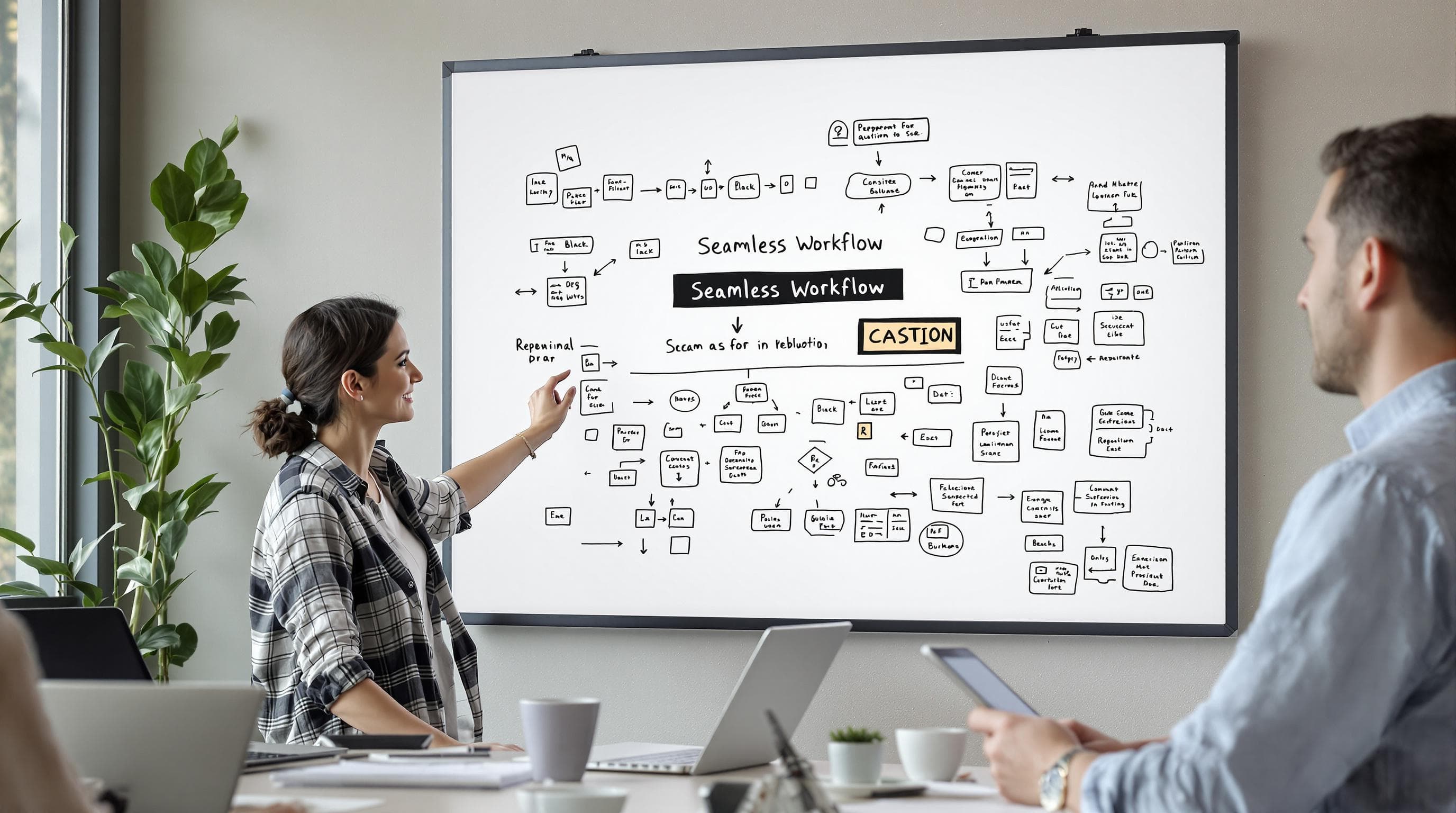
In the digital era, selecting the right collaborative technologies can make or break a project. Effective IT consultants leverage advanced project management and communication tools that enable real time collaboration, document sharing, and progress tracking.
Key technological considerations include:
Cloud based project management platforms
Secure file sharing systems
Virtual whiteboarding tools
Real time communication applications
Collaborative coding environments
These tools not only facilitate smoother workflow but also create a digital ecosystem that supports transparent, efficient teamwork across potentially distributed consulting teams.
Developing a Shared Vision and Mutual Respect
Beyond technical tools and communication protocols, successful collaboration hinges on developing a genuine shared vision and mutual professional respect. Each consultant brings unique skills, perspectives, and professional experiences to the project.
Strategies for building this collaborative mindset include:
Conducting initial team alignment workshops
Creating shared project goals and success metrics
Encouraging open dialogue and constructive feedback
Recognizing and valuing individual team members' expertise
Maintaining a growth oriented, solution focused approach
Consultants who prioritize mutual understanding and respect can transform potential interpersonal challenges into opportunities for innovation and collective problem solving.
In 2025, successful IT consulting collaboration will be defined not just by technical outcomes but by the quality of professional relationships and the ability to create integrated, holistic solutions that transcend individual capabilities.
Overcoming Challenges When Working Together
Collaborative consulting projects in the IT sector are not without significant hurdles. Understanding and proactively addressing these challenges is crucial for maintaining productive professional relationships and delivering high quality outcomes.
Below is a summary table outlining common challenges in consultant collaboration and potential approaches mentioned in the article to overcome them.
Challenge | Common Issues | Overcoming Approaches |
Communication & Trust Barriers | Virtual team friction, lack of transparency | Transparent protocols, informal interactions, accountability |
Technical Integration & Workflow | Misaligned tools, nonstandard documentation, processes | Standardization, common platforms, shared guidelines |
Conflicting Professional Perspectives | Different problem-solving approaches, methodologies | Alignment workshops, feedback mechanisms, collective goals |
Navigating Communication and Trust Barriers
Virtual collaboration introduces complex interpersonal dynamics that can undermine project success. Explore remote collaboration strategies to mitigate potential communication breakdowns. According to research examining virtual team management, trust and professional identity play critical roles in effective team interactions.
Key strategies for building trust include:
Establishing transparent communication protocols
Creating opportunities for informal digital interactions
Developing clear accountability mechanisms
Implementing regular video check ins
Recognizing individual contributions publicly
These approaches help transform potential communication barriers into opportunities for deeper professional understanding and collaboration.
Technical Integration and Workflow Challenges
Technical consultants often encounter significant challenges when integrating different working styles, technological platforms, and project management approaches. A comprehensive study on machine learning system deployment highlights the critical importance of documentation, engineering processes, and clear communication protocols.
Effective technical collaboration requires:
Standardizing documentation practices
Establishing common technological platforms
Creating clear workflow integration guidelines
Developing shared coding and design standards
Implementing robust version control mechanisms
By proactively addressing these technical integration challenges, consultants can create more seamless and efficient collaborative environments.
Managing Conflicting Professional Perspectives
Diverse professional backgrounds can lead to potential conflicts in problem solving approaches and project methodologies. Successful consultants recognize these differences as opportunities for innovation rather than obstacles.
Strategies for managing diverse perspectives include:
Conducting initial team alignment workshops
Encouraging respectful dialogue
Creating mechanisms for constructive feedback
Developing flexible problem solving frameworks
Prioritizing collective goals over individual approaches
Consultants who can navigate these differences effectively transform potential conflicts into opportunities for comprehensive solution development.
In 2025, the most successful IT consulting collaborations will be characterized by adaptability, mutual respect, and a commitment to continuous learning. By anticipating and proactively addressing potential challenges, consultants can create powerful collaborative partnerships that deliver exceptional value to clients.
Building Lasting Consultant Networks in North America
In the dynamic IT consulting landscape of 2025, building robust and sustainable professional networks is no longer optional it is a strategic imperative. Successful consultants recognize that their professional ecosystem is their most valuable asset, providing opportunities, insights, and collaborative potential.
Strategic Network Development Approaches
Learn about effective client acquisition strategies that complement network building. According to research on professional collaboration, effective networks require a structured yet flexible approach. The seven-phase collaboration model emphasizes participative knowledge creation and continuous commitment to joint problem solving.
Key strategies for intentional network development include:
Attending specialized industry conferences
Participating in professional online communities
Engaging in targeted LinkedIn networking
Contributing to open source projects
Presenting at technical workshops and seminars
These approaches transform networking from passive connection making to active knowledge exchange and relationship building.
Cultivating Quality Connections
Quantity does not equate to network quality. Research from healthcare professional knowledge sharing reveals that professionals intentionally choose knowledge sharing partners in fluid, non hierarchical ways. This principle applies equally to IT consulting networks.
Effective network cultivation requires:
Focusing on depth over breadth of connections
Identifying consultants with complementary skills
Maintaining consistent professional communication
Offering value before expecting returns
Creating mutual learning opportunities
Successful consultants view their network as an ecosystem of potential collaboration, not merely a list of contacts.
Leveraging Institutional and Cross Sector Partnerships
Beyond individual connections, consultants in 2025 must think strategically about institutional partnerships. EDUCAUSE research highlights the importance of defining clear collaboration goals and actively participating in cross sector partnerships.
Strategic partnership development involves:
Understanding institutional collaboration frameworks
Developing clear mutual value propositions
Creating structured knowledge exchange mechanisms
Maintaining transparency and shared objectives
Remaining adaptable to evolving collaboration models
Consultants who master the art of building meaningful, lasting networks will position themselves at the forefront of the IT consulting industry. In 2025, success will be defined not just by individual expertise, but by the ability to create and nurture powerful professional ecosystems that drive innovation and solve complex technological challenges.
Frequently Asked Questions
What are the benefits of collaborating with other IT consultants?
Collaborating with other IT consultants allows for access to diverse expertise, objective perspectives, and expanded professional networks, enabling consultants to tackle complex projects more effectively.
How can clear communication enhance collaborative projects in IT consulting?
Establishing clear communication protocols ensures that all team members understand their roles and responsibilities, which helps prevent misunderstandings and enhances project outcomes.
What challenges do consultants face when collaborating, and how can they overcome them?
Common challenges include communication barriers, technical integration issues, and conflicting professional perspectives. These can be overcome by establishing transparent communication protocols, standardizing documentation practices, and promoting respectful dialogue.
How important is it to build a professional network as an IT consultant in 2025?
Building a professional network is essential for IT consultants in 2025, as it opens up new business opportunities, enhances collaborative potential, and allows for knowledge sharing among peers in the industry.
Level Up Your Consulting Through Real Collaboration
Have you realized how challenging it is to stand out as a solo consultant in today’s fast-moving IT world? Many professionals in 2025 are facing the frustration of missed opportunities, limited networks, and the stress of handling complex projects alone. The article highlights that collaboration is not just a trend—it is a powerful solution for those who want to access diverse expertise, accelerate knowledge transfer, and grow their consulting business. If you have ever felt isolated or unsure how to build a trusted network, you are not alone. Many early-stage consultants struggle with bringing together complementary skills and establishing clear communication, which were identified as essential for success in the article.

Ready to transform your solo practice and unlock new opportunities through collaboration? Visit The Consultant’s Compass website for proven frameworks, practical tools, and the bestselling guide, Becoming a Solo Consultant, designed specifically for independent consultants like you. Discover mentorship, rate calculators, and insight on building strong partnerships so you can avoid costly mistakes and create a business filled with freedom and confidence. Take the next step now and let The Consultant’s Compass help you achieve the collaborative advantage discussed in this article.
Recommended
Comments